Bad news for Jio, Airtel users as mobile recharge!!!
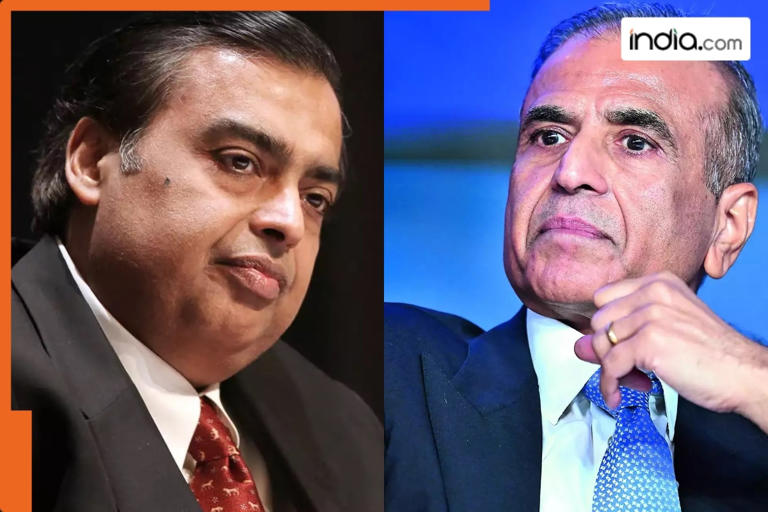
Bad news for Jio, Airtel users as mobile recharge. In a matter of concern for the Indian middle class who already pay hundreds of rupees on their mobile internet every month, global investment firm Morgan Stanley has reported that Indian telecom companies could raise the prices of 4G and 5G plans by 16 to 20 percent in 2026. As per the report, the coming year, i.e., 2026 could be a financially tough for India’s millions of mobile users due to inflated mobile recharge plans. This would be earlier and sharper than earlier estimates, which had projected a smaller hike next year. Here are all the details you need to need to know about the expected hike in the tariff plans of Indian telecom companies.
Hike in prepaid and postpaid recharge plans expected
The report, cited by The Economic Times, suggests that both prepaid and postpaid users will be affected due to the increase in prices of recharge plans by telecom companies. As per the report, telecom operators have already started preparing customers for higher prices by quietly removing low-cost plans and limiting OTT streaming benefits to premium packs. If the forecast comes true, this will mark the fourth major tariff hike in eight years, following increases in 2019, 2021, and 2024.
Higher tariffs are likely to significantly boost Airtel’s average revenue per user (ARPU). The report estimates Airtel’s ARPU could rise from Rs 260 in FY26 to over 320 by FY28, driven by better data pricing, growth in postpaid users, and higher roaming demand.
Why Airtel and Reliance Jio may increase Recharge plan prices again?
The timing of the hike suits both Airtel and Reliance Jio, as their major 5G investments are largely complete and costs are easing. Vodafone Idea, meanwhile, remains a wildcard, its future depends heavily on timely funding and policy support. For consumers, the message is clear: expect better networks, but be ready to pay more.
1. Monetizing 5G Investments
After investing heavily in nationwide 5G infrastructure, telecom operators are shifting from expansion to monetization. Higher tariffs are seen as necessary to recover the massive capital expenditure (CapEx) associated with spectrum acquisitions and network upgrades.
2. Improving Average Revenue Per User (ARPU)
A key financial goal for both companies is raising their ARPU to ensure long-term business sustainability.
- Airtel has consistently pushed for an ARPU target of ₹300 (reaching ₹256 in late 2025), arguing that current rates in India remain among the lowest globally.
- Jio is also looking to bolster its financials, potentially ahead of a rumored Initial Public Offering (IPO) in 2026.
3. “Tariff Repair” and Operational Costs
Operators use the term “tariff repair” to describe adjusting prices to match rising operational costs and inflation. By increasing prices, they aim to stabilize earnings and improve free cash flow after years of intense price wars.
4. Strategic “Nudging” of Consumers
Instead of just increasing base prices, companies are employing “subtle” hikes by:
- Phasing out entry-level plans: Many cheaper 1GB/day plans have been removed, forcing users toward higher-value 1.5GB/day or 2GB/day packs.
- Premium Bundling: Restricting 5G access to higher-priced data plans (e.g., those with 2GB/day or more) to encourage users to pay for premium tiers.
Expected Impact on Popular Plans
| Current Plan (Approx.) | Expected New Price (10-12% Hike) |
|---|---|
| ₹199 (Basic) | ₹222 |
| ₹719 (84 Days) | ₹799 |
| ₹899 (Long-term) | ~₹1,006 |


Post Comment